


What is UDS in an Apartment?
What is UDS in an Apartment?
Why It Matters Before You Sign
JKB Housing | Home Buying Guide
You’ve shortlisted a flat. The location feels right, the floor plan works, the price fits. And then someone — your lawyer, a friend, or a clause in the sale agreement — mentions UDS.
Undivided Share of Land.
If you’re hearing this for the first time, you’re not alone. Most first-time buyers in Chennai skip past it. And that’s a mistake worth avoiding.
Here’s what UDS actually means, why it matters, and what to check before you sign.
First, a Simple Way to Think About It
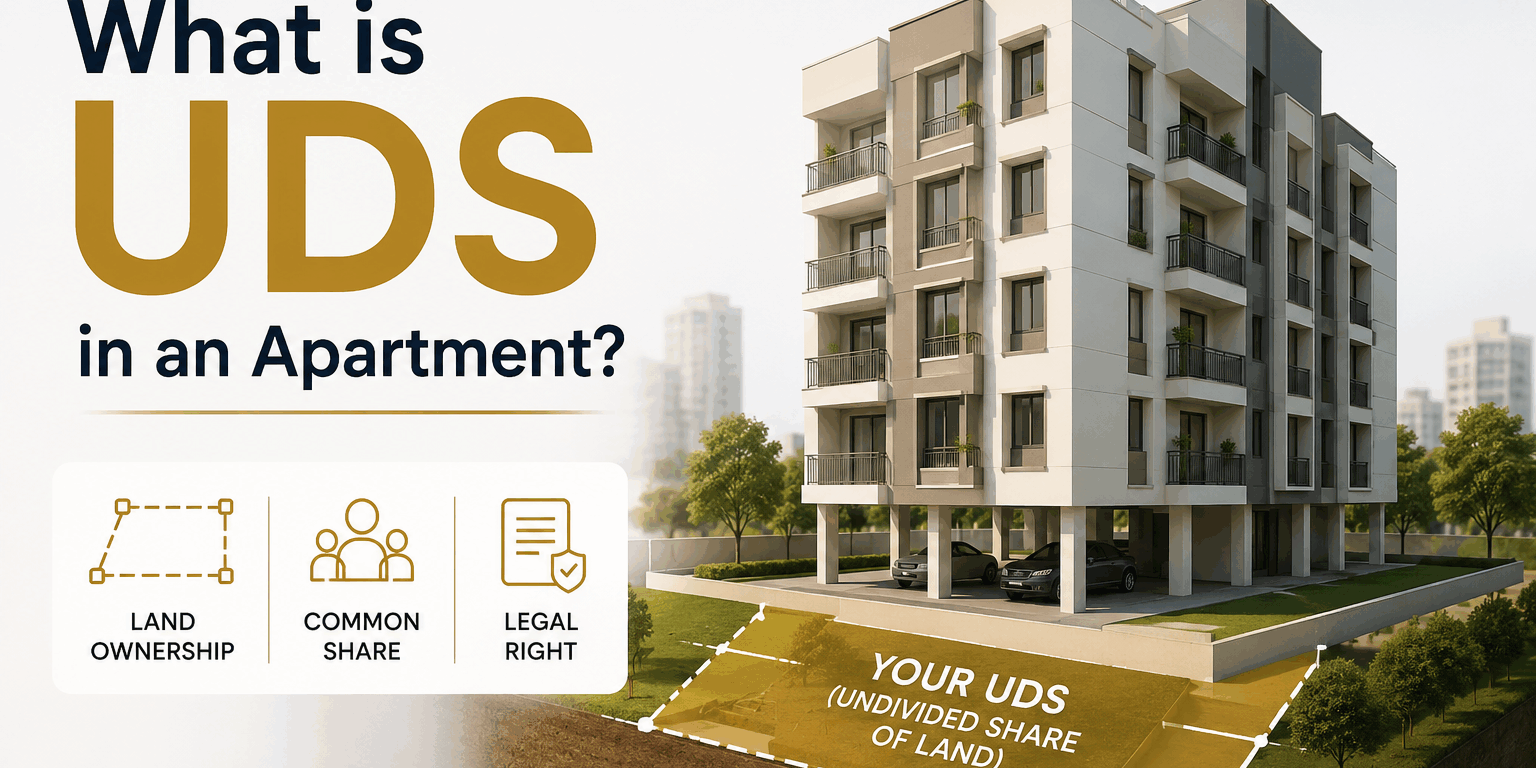
When you buy an apartment, you’re not buying land the way you’d buy a plot. The land beneath the entire building is shared — by every flat owner in that complex.
UDS is your slice of that shared land. It’s not a physical boundary. You can’t put a fence around it. But legally, it’s the portion of the total land that belongs to you.
Think of it this way: if a building has 10 identical flats on 5,000 sq ft of land, each owner gets an undivided share of 500 sq ft. That’s their UDS.

How UDS is Calculated
There’s no single universal formula, but the most common method ties UDS to your flat’s carpet area as a proportion of the total carpet area in the building.
Example: Total land: 10,000 sq ft. Your flat: 1,000 sq ft. Total carpet area of all flats: 20,000 sq ft.
Your UDS = (1,000 ÷ 20,000) × 10,000 = 500 sq ft
Larger flats get a proportionally higher UDS. The exact UDS for your flat will be stated in the sale agreement and registered sale deed. Always verify that the number in the agreement matches what your builder quotes verbally.

Why Does UDS Matter So Much?
1. It Determines the Real Value of What You Own
Your flat is a structure. Structures depreciate over time — they age, wear out, and eventually need to be rebuilt.
Your UDS is land. And land in Chennai doesn’t depreciate. It appreciates.
Fifty years from now, if the building is redeveloped, your compensation in the new building will be calculated based on your UDS. A higher UDS means more in return.
Two flats with the same carpet area can have different UDS values. The one with higher UDS is genuinely worth more — even if the sale price today looks identical.
2. It’s the Basis for Legal Ownership
In Tamil Nadu, your UDS is what gets registered in your name at the Sub-Registrar’s office. The sale deed states your undivided share of the land explicitly.
Without a proper UDS registration, your ownership of the flat rests on shakier legal ground than it should.
3. It Matters for Home Loans and Resale
Banks assess UDS when approving loans on apartments. An unclear or disproportionately low UDS can affect your loan eligibility — or create complications during resale when the next buyer’s bank scrutinises the same documents.
NRI Buyers: Your capital gains calculation on eventual sale is tied to the land value — which includes your UDS. A higher UDS means a stronger asset on your balance sheet. Ensure your Power of Attorney holder verifies UDS details at registration.

What to Check in Your Sale Agreement
Before signing, confirm these four things:
1. Is the UDS clearly stated? It should be a specific number — in square feet or as a fraction of the total land area. Vague language like “proportionate share” without a figure is a red flag.
2. Does it match the size of your flat? If a neighbour has the same carpet area as you but a significantly higher UDS, ask why. There should be a logical explanation.
3. Does the total UDS add up? Add up the UDS of every flat in the project. It should equal 100% of the land. If the numbers don’t tally, something is off.
4. Is the land title clear? UDS is only as valuable as the land it represents. Always run an Encumbrance Certificate (EC) check before finalising.
The one-line version:
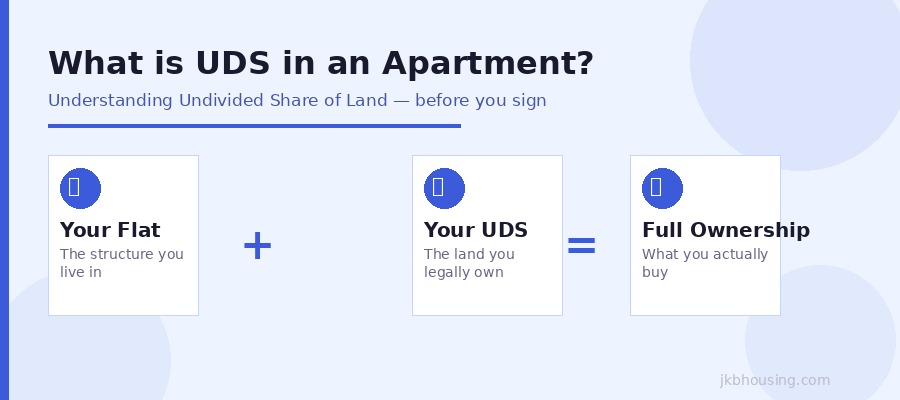
Your flat is what you live in. Your UDS is what you own. Both matter — but UDS is the number that counts long-term.

Buying an Apartment in Chennai?
At JKB Housing, every sale agreement clearly states the UDS for each flat — no vague language, no surprises. Our ongoing projects in Mogappair, Kilpauk, Virugambakkam, and Valasaravakkam are TNRERA-registered with clean land titles and transparent documentation.
If you’d like to know the UDS details for any of our current projects, our team is happy to walk you through it.
JKB Housing is a Chennai-based residential developer committed to transparent, on-time delivery. We believe every homebuyer deserves to understand exactly what they’re buying — before they sign.




 Sales
Sales