


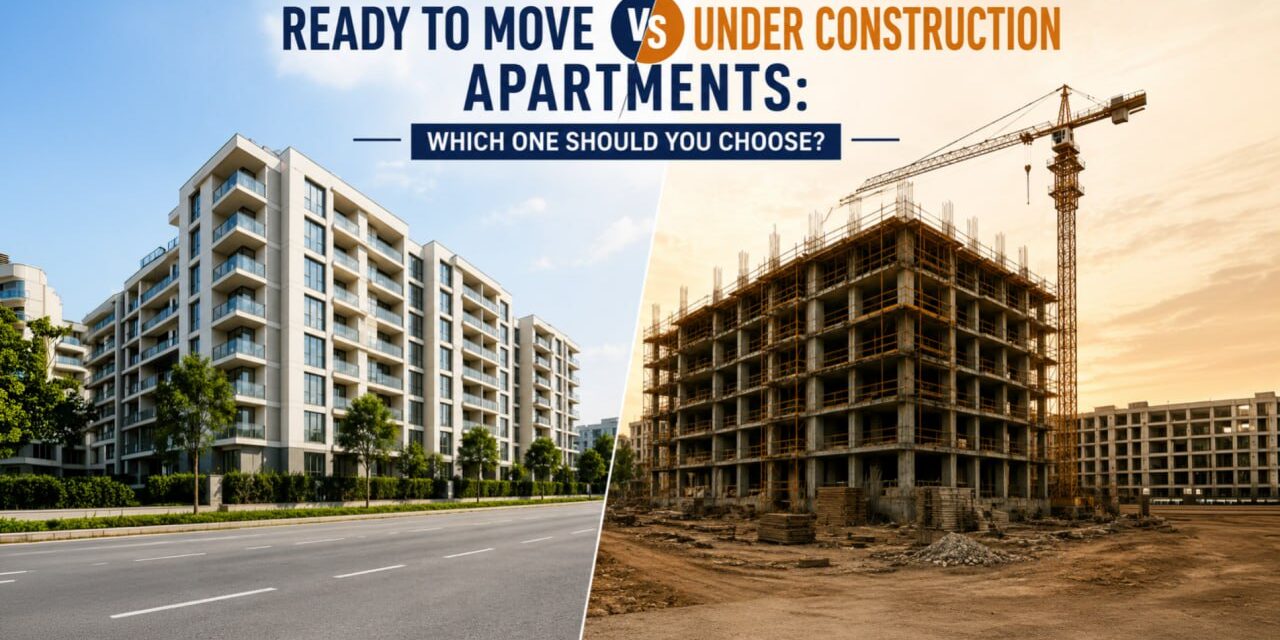
Ready-to-Move vs Under-Construction Apartments: Which One Should You Choose?
Buying a home is one of the most significant financial decisions of your life — and one of the very first questions every buyer faces is this: Should I buy a ready-to-move-in apartment or book an under-construction project? Both options have real advantages and genuine risks. The right answer depends entirely on your financial situation, timeline, risk appetite, and what you value most in a home-buying experience. This guide breaks it all down, with no fluff.
Understanding the Two Options
Before diving into the debate, let’s establish what each term means in the Indian real estate context — particularly relevant for homebuyers in Chennai and Tamil Nadu.
Ready-to-Move (RTM)
Move in immediatelyA completed apartment with an Occupancy Certificate (OC) issued by the local authority (CMDA/DTCP in Tamil Nadu). The unit is fully constructed, handed over, and legally habitable. What you see is what you get.
Under-Construction (UC)
Book now, possess laterAn apartment that is booked at the launch or construction stage. You pay in tranches linked to construction milestones, and possession is handed over typically 1-3 years after booking. Often available at a lower entry price.
Ready-to-Move Apartments: Pros & Cons
RTM apartments are increasingly preferred by end-users who want certainty, especially after the pandemic years reshaped buyer priorities. Here’s a clear breakdown:
- ✓Immediate possession — no waiting, no delays
- ✓Zero GST if Occupancy Certificate is in place
- ✓What you see is what you get — no surprises
- ✓No dual rent burden (no paying rent + EMI)
- ✓Can be rented out immediately for rental income
- ✓Society & amenities fully functional
- ✓Easier home loan approval & disbursement
- ✓Lower developer risk — project is already done
- ✕Higher price — premium for certainty
- ✕Limited customisation — can’t change layout or finishes
- ✕Fewer choices in inventory — limited unit options
- ✕Older construction may mean dated fixtures/specs
- ✕Potential for hidden defects not visible during visit
- ✕Less capital appreciation from purchase point
Under-Construction Apartments: Pros & Cons
Under-construction properties attract buyers who are willing to wait in exchange for better pricing and the potential for stronger capital appreciation by the time of possession.
- ✓Lower entry price — 12–20% cheaper at launch
- ✓Higher capital appreciation potential
- ✓Staggered payment plan — easier on cash flow
- ✓Better unit selection — first choice of floors & views
- ✓Opportunity to customise interiors
- ✓Modern construction standards & newer amenities
- ✓Investor-friendly: buy low, sell at possession
- ✕Delivery delays — sometimes 1–2 years beyond promise
- ✕GST of 5% (affordable) or 5% (others) applies
- ✕Dual burden of rent + EMI during construction
- ✕Developer default or financial stress risk
- ✕Final unit may differ from brochure/showflat
- ✕No rental income until possession
Since 2017, TNRERA (Tamil Nadu Real Estate Regulatory Authority) mandates that above 500 square meter land area projects above a threshold size be registered. Always verify TNRERA registration before booking. Registered projects offer legal protection on delivery timelines, mandatory escrow accounts, and penalty clauses for delays.
Head-to-Head: The Full Comparison:
| Parameter | Ready-to-Move | Under-Construction |
|---|---|---|
| Price | Higher (market price) | Lower by 12–20% at launch ✓ |
| Possession | Immediate ✓ | 2–4 years after booking |
| GST | NIL with valid OC ✓ | 5% on total value |
| Capital Appreciation | Moderate | Higher potential ✓ |
| Payment | Lump sum / full loan | Staggered (milestone-linked) ✓ |
| Rental Income | Immediate ✓ | Only after possession |
| Risk Level | Low — project complete ✓ | Higher (delivery, quality) |
| Customisation | None | Possible during construction ✓ |
| RERA Protection | Limited (already built) | Fully applicable ✓ |
| Home Loan EMI | Starts immediately | Pre-EMI option available ✓ |
| OC/CC Status | Already issued ✓ | Obtained at completion |
| Dual Cost Burden | None — move in immediately ✓ | Yes (rent + EMI) |
| Best For | End-users, families | Investors, patient buyers |
GST & Tax Implications: The Detail That Changes Your Budget
Tax is one of the most decisive factors in this comparison — and one of the most misunderstood. Here’s a clear breakdown of how GST applies to each type:
Who Should Choose What?
In corridors like OMR, Pallavaram–Thoraipakkam Road, and Poonamallee, under-construction launches from reputed developers have shown 15–25% appreciation by possession. Meanwhile, RTM inventory in Adyar, Velachery, and Anna Nagar commands premium pricing due to zero wait-time and GST savings.
Due Diligence Checklist Before You Buy
Regardless of which option you choose, never skip these steps before signing on the dotted line.
Explore more on JKB Housing
Frequently Asked Questions
Is GST really zero on all ready-to-move apartments?
GST is zero only if the apartment has a valid Occupancy Certificate (OC) issued by CMDA or the relevant local body. If the OC has not been issued, even a visually completed apartment is legally ‘under-construction’ and will attract 5% GST. Always ask for the OC before assuming no GST applies.
Can I get a home loan for an under-construction property?
Yes. Banks and HFCs provide home loans for UC properties, disbursed in tranches linked to construction progress. You typically pay only pre-EMI interest during construction, with full EMI starting after possession. Ensure the project is pre-approved by your bank before proceeding.
What if the builder delays possession?
Under TNRERA, if a registered project is delayed beyond the committed date, you are entitled to interest on amounts paid at SBI MCLR rate + 2%. You can also file a complaint with TNRERA for compensation or seek a refund with interest. This is why RERA registration is essential before booking any UC project.
Which is better for investment — RTM or under-construction?
For pure investment, under-construction typically offers better ROI if you book with a credible developer in a high-growth corridor. RTM is better for rental yield investment since you can start earning immediately.
How do I know if an under-construction project is safe?
Key markers: TNRERA registration (check tnrera.in), CMDA/DTCP approved building plan, a developer with 3–5 successfully delivered past projects, and a transparent sale agreement with defined possession dates and penalty clauses. Avoid booking in projects where these elements are missing.
Not Sure Which Is Right for You?
Our advisors at JKB Housing have helped hundreds of Chennai families navigate this exact decision. We offer both ready-to-move and under-construction options across Chennai’s best neighbourhoods.
Talk to an Advisor →





 Sales
Sales